100 iGulu User Stories: From Never Brewing to a Four-Machine Brewing Routine — Steve's iGulu Journey
Steve never started out thinking of himself as a homebrewer.
In fact, before iGulu, he had never brewed beer at all. He enjoyed beer, understood beer, and had tried it from all over the world, but brewing it himself was never something he considered a natural step.
But what shaped him was something else: a lifelong role as an observer.
When he was younger, Steve lived in the UK for a year and, through his work, spent time in breweries across England, Scotland, Ireland, and other parts of Europe. He visited traditional pubs, watched Guinness being poured, and tasted beers from small regional breweries. Over time, he developed very clear preferences and a strong sense of what he liked.
Still, none of that made him interested in brewing his own beer.
If anything, his impression of homebrewing was cautious.
He had tried beer brewed by friends or acquaintances at home — sometimes even in wardrobes — and those experiences didn't encourage him to explore further. As he later recalled, those beers simply weren't to his taste, and he would usually politely decline a second glass.
I found what they were brewing to be undrinkable.
So when Steve later purchased iGulu through Kickstarter, he didn't immediately start using it.
A Machine That Sat Unopened for Five Months
When the machines arrived, Steve did not rush into setup.
They stayed unopened for nearly five months.
But this wasn't hesitation — it was a period of understanding.
He needed to figure out how the system worked, how it would fit into his environment, and how he would actually use it in practice. During this time, he explored iGulu materials, watched independent brewing content, and slowly built a clearer mental model of the system.
One creator had a particularly strong influence on him: Brian from Benham Brewing. The early independent reviews and hands-on content helped Steve understand both the strengths and limitations of the system in a grounded, realistic way.
Once that understanding settled, he moved into actual usage.
When he began setting up the machines, he also reached out to iGulu support. Steve has often mentioned Freddie and the support team as an important reason he was able to move from understanding the system to actually using it consistently.
I needed to know a lot more to figure out where I'd brew.
From Understanding a Machine to Building a Brewing Rhythm
Within the 100 iGulu User Stories series, Steve stands out for how he gradually transformed brewing into a structured system.
As Steve completed his first brews, something started to shift.
He no longer saw iGulu as a single device, but as something closer to a rhythm.
This change didn't happen all at once. It emerged gradually through repeated use.
After each batch finished, he would remove the keg, store it in the fridge, and immediately start the next brew.
Over time, he realized he wasn't just focused on producing beer anymore. He was focused on keeping a continuous process running.
As this rhythm developed, his setup expanded into a four-machine iGulu system, distributed across different locations.
But for Steve, the meaning of this wasn't about owning more machines — it was about sustaining continuity.
It's become my goal to brew all the beer I drink.
 |
 |
 |
| Parallel Brewing, Steve's Active iGulu System | Steve's Distributed Home Brewing System | Kegs Resting After Brewing in Steve's Fridge |
A Very Engineering-Like Way of Drinking Beer
Steve's approach to beer is highly observational.
He doesn't judge a beer on the first sip. Instead, he watches how it evolves over time.
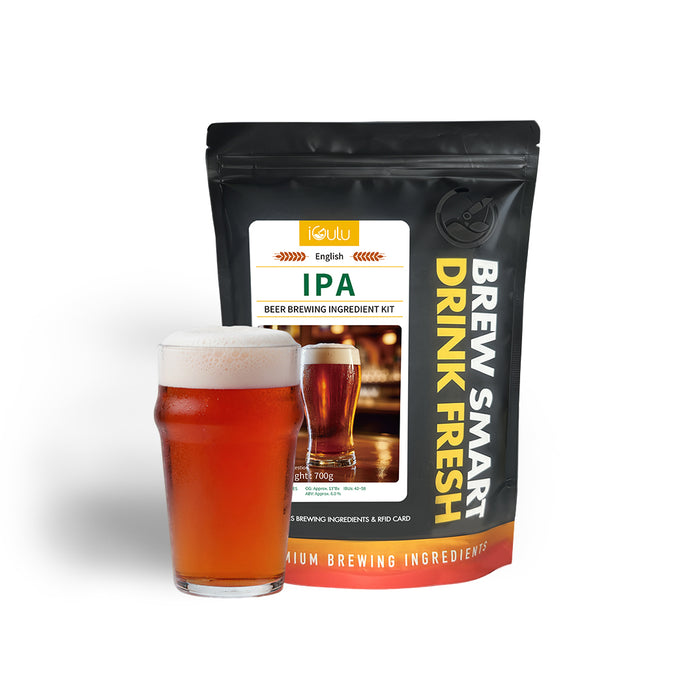
With the English IPA kit, for example, he tracked changes across multiple days — foam stability, perceived sweetness, and overall balance.
On the first day, he found it slightly sweet with more foam than expected.
As time went on, that impression began to change.
On the second day, he noticed improvement as conditioning progressed. By the third and fourth day, he was drinking multiple pints and comparing each pour across different moments.
Through this process, he formed a simple personal benchmark:
A good beer tastes as good at the bottom of the second pint as it did at the beginning of the first.
It was during this kind of continuous observation that he began to truly understand the idea of process.
 |
 |
| English IPA in Progress | A Fresh Pour of English IPA from Steve's Brew |
From Complex Brewing to Repeatable Experience
Steve also explored more traditional brewing approaches.
With guidance from Freddie, he learned about styles such as Berliner Weisse and discussed more complex recipes like Gose.
But as he gained more experience, one thing became clear:
These multi-step, hands-on brewing processes were not something he wanted as part of his regular routine.
Instead, he gravitated toward guided kits — not because he avoids complexity, but because he values repeatability and consistency across multiple brewing cycles.
At that point I realized this is probably something I will never want to do.

A Traditional Style Brew, Berliner Weisse by Steve
The Reality of Running Multiple Systems
As his brewing activity increased, Steve began managing multiple brewing cycles at the same time across different locations.
This naturally made clarity of information more important to him.
Before starting each batch, he would pay close attention to one thing: how clearly the brewing time and process were communicated for each kit.
When brewing becomes continuous rather than occasional, planning becomes just as important as brewing itself.
For Steve, clarity is no longer just convenience — it is part of the system.
Golden Lager: A Familiar Kind of Beer
Among the kits Steve has brewed, Golden Lager stood out.
He described it as having clear characteristics of English beer — smooth, well-balanced, with fine carbonation and a rounded mouthfeel.
Compared to many standard lagers, he found it more layered and more satisfying over time.
More importantly, after extended drinking, he said it was a beer he would confidently share with friends in the UK.
For someone with deep experience in British beer culture, that comparison carries real weight.
It has the characteristics of an English beer.
A Natural Curiosity Toward Gose
As his brewing journey developed, Steve also became interested in more styles, including the upcoming Sea Salt Gose.
He is particularly fond of traditional Gose, especially versions that focus on salt character rather than fruit additions.
In his experience, it is difficult to find a true representation of this style in the US market, where many versions lean toward fruit-forward interpretations.
Before this release, Steve had discussed Gose recipes with Freddie, but found the traditional process too complex for regular use.
Because of that, his reaction to the kit is very simple: it brings back a style he enjoys, but makes it more accessible within a guided system.
A Small but Stable Daily Ritual
Steve and his wife Sharyl maintain a daily ritual around 5 PM.
Sharyl prefers margaritas, mojitos, and gin & tonics, while Steve often pours a beer brewed through iGulu.
Over time, this has become a stable part of their daily rhythm.

Steve and Sharyl, Their Daily 5 PM Beer Ritual
Steve's story is not about becoming a traditional homebrewer.
It is about an observer gradually becoming an active participant.
From leaving machines unopened for months, to building a continuous brewing rhythm across four machines; from first uncertainty to carefully observing each beer over time; from drinking beer to understanding the system behind it.
Steve did not change what he drinks.
He changed how he relates to it.
And in his own words, his goal remains simple:
To brew every beer he drinks.